


Webinar - Report release
The Hidden Achilles’ Heel of Fossil Finance
New research reveals an overlooked strategy for climate action
Despite years of campaigning, banks continue to pour vast sums into fossil fuels while the world struggles to finance a just transition. But what if the climate movement has overlooked one of its most powerful points of leverage?
Drawing on five years of research and interviews with 50 leaders in climate finance, banking and monetary reform, Sam Hummel presents new findings on a largely hidden source of banks’ power — and how their dependence on governments could become an opportunity to curb fossil fuel finance and unlock funding for climate solutions.
Together with X co-organizers, we invite you to a pre-release presentation of two forthcoming reports and a discussion about what this could mean for the next generation of climate action.
* By clicking the button, you agree to IMMR emailing you more information about our future webinars. You can stop receiving our emails whenever you want by clicking unsubscribe.
This could be next-generation work. A new kind of climate activism... that would get the attention of politicians.
— Former governor of a globally influential central bank, one of fifty leaders interviewed in confidence by the Money Justice Collaborative
A new strategy for climate action
For decades, climate movements have fought to stop fossil fuel financing and mobilise the investments needed for a green transition. Yet banks continue to channel vast amounts of finance into fossil fuels, while governments insist that funding for climate solutions is limited.
New research from the Money Justice Collaborative, based on five years of research and interviews with 50 leaders in climate finance, banking scholarship and monetary reform, points to a largely overlooked source of leverage:
Commercial banks depend on governments for the privileges that enable them to create money through lending. These privileges are granted, protected and regulated by the state — and governments have restricted or reshaped them many times before.
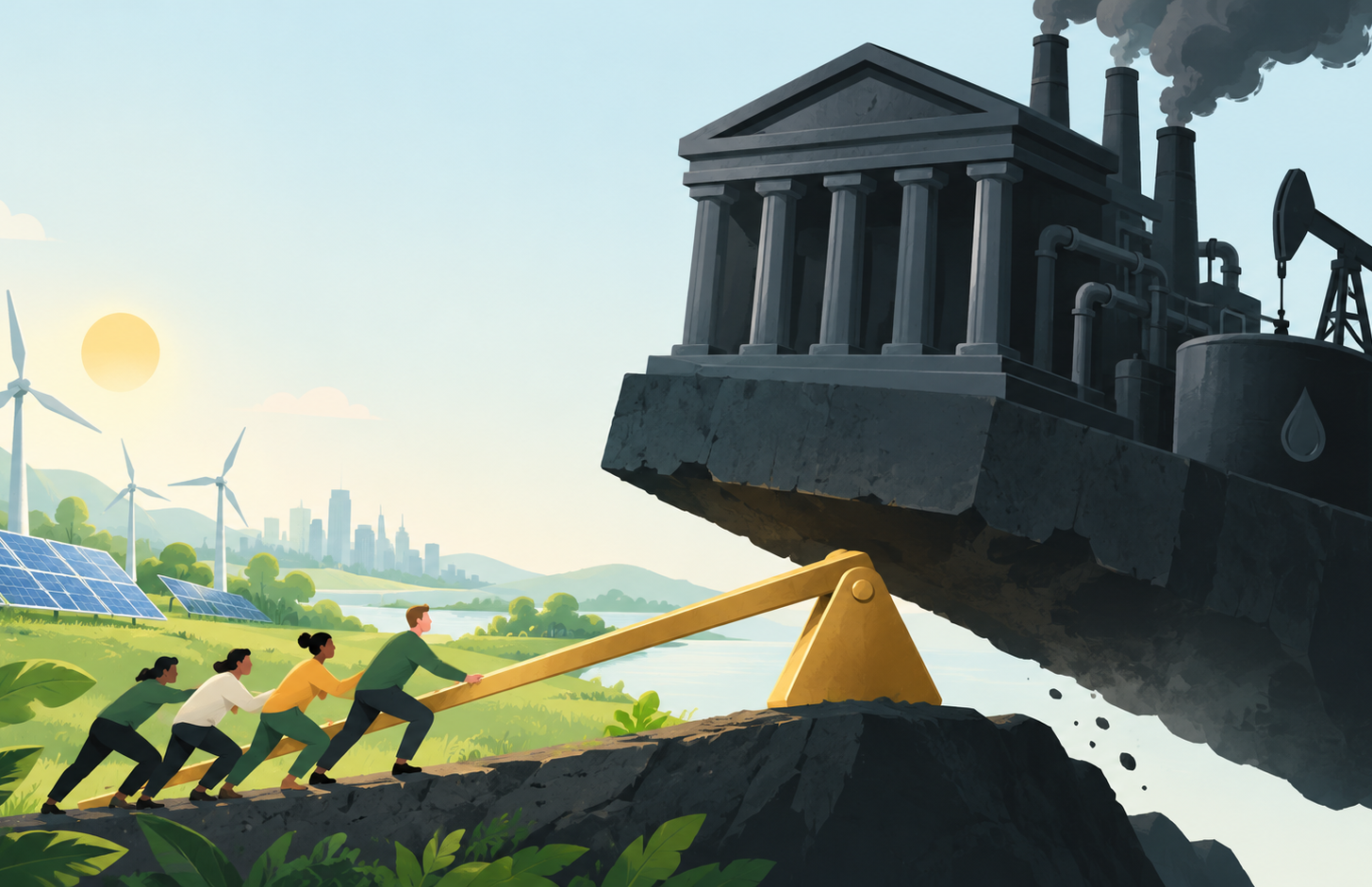
What if the climate movement started using this dependence as leverage? The research suggests that challenging banks’ money-creation privileges could help curb fossil fuel financing and open new possibilities for funding climate solutions.
A Hidden Obstacle for the Green Transition
Among decision makers, climate activists and journalists, it is still widely unacknowledged that states provide an almost endless stream of new money for fossil fuel investments.
The state has delegated money creation to private banks. When banks make loans, they create new money — and decide which households, companies and investments get access to it. As long as fossil fuel projects remain profitable and creditworthy, banks can continue creating new money to finance them.
This means that efforts to shift existing money toward green investments are constantly undermined by the creation of new money for fossil fuels.
But here lies the hidden opportunity.
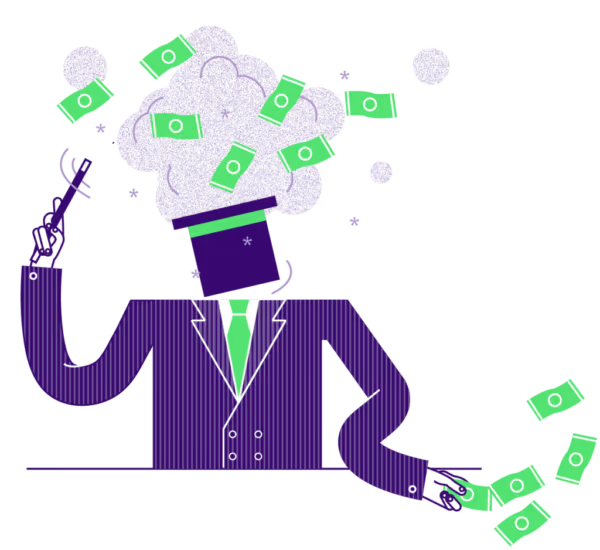
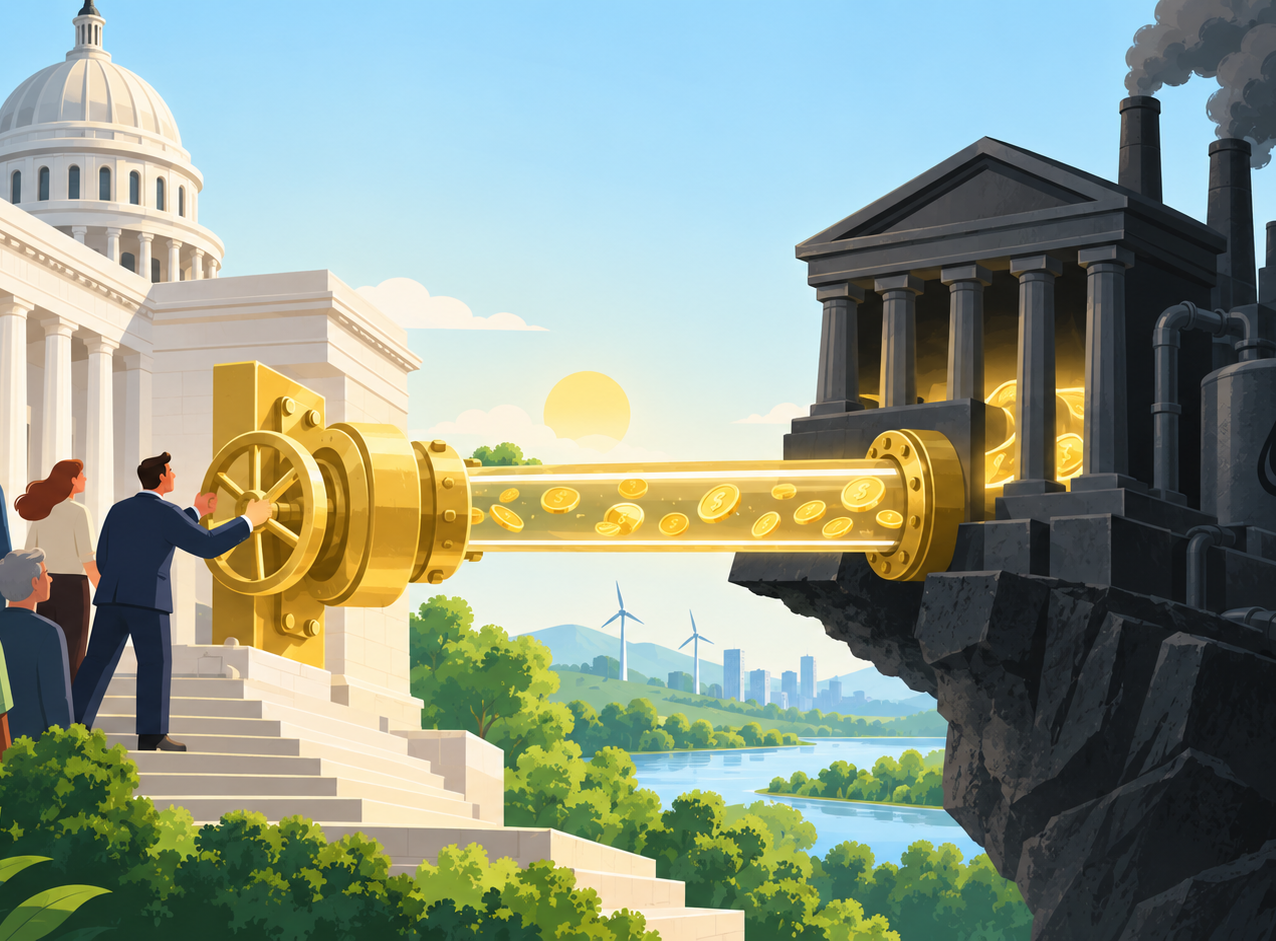
Banks do not possess this power independently. Their ability to create money depends on legal and institutional privileges granted and protected by governments. These privileges can be regulated, restricted or reshaped — and governments have done so many times before.
This is the potential Achilles’ heel identified in Sam Hummel’s research: if banks depend on the state for their power to create money, the climate movement can demand that this privilege comes with conditions.
Banks that continue financing fossil fuels could be forced to finance such lending with existing money instead of being allowed to create new money for it.
A Strategy Proven in Practice
Governments have repeatedly changed the rules governing banks when economic or political priorities demanded it. Throughout history, states have restricted, redirected and reshaped bank lending — and social movements have successfully challenged the privileges granted to financial institutions.
Sam Hummel’s research finds that similar strategies are already beginning to appear in climate finance advocacy. By targeting the public privileges that banks depend on, campaigners can create political pressure at a deeper level than simply asking individual banks to voluntarily change their behaviour.
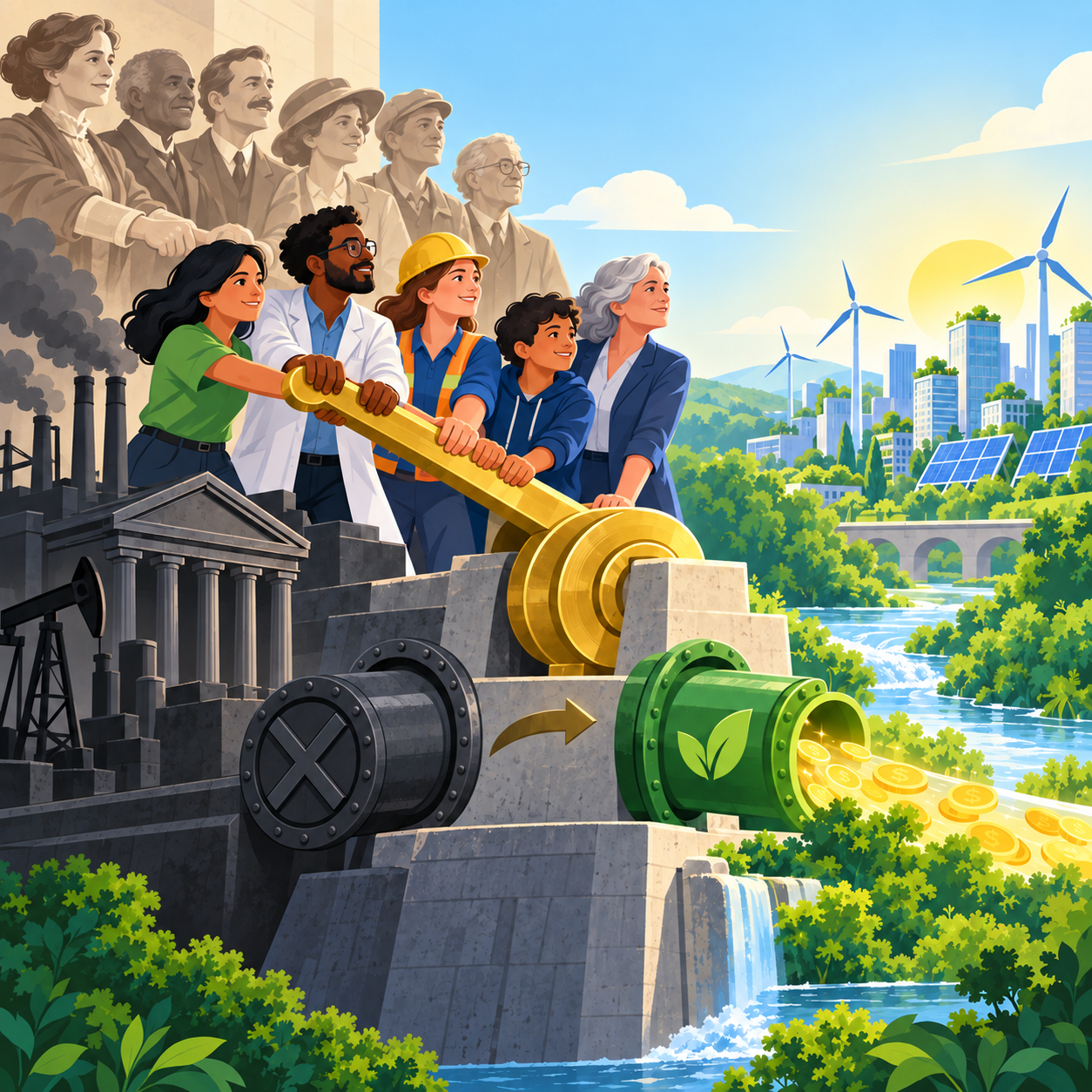
The goal is not only to persuade banks to finance fewer fossil fuel projects. It is to change the rules that make large-scale fossil fuel financing possible in the first place.
The research suggests that this could open a new front in climate campaigning — combining financial regulation, public accountability and monetary reform to shift finance toward climate solutions.
The webinar is for you who are:
- Climate activists and campaigners looking for new leverage points
- NGOs and civil society organisations working on climate and finance
- Researchers and students interested in banking, money and climate policy
- Policymakers and public officials working on financial regulation or the green transition
- Monetary reformers and economists seeking stronger links to climate action
- Anyone curious about how the financial system shapes the climate crisis
No specialist background is required. The webinar is designed for a broad audience, while still engaging seriously with one of the most important economic questions of our time.
What you will learn
- How banks create new money through lending — and why this matters for climate
- Why fossil finance depends on public privileges granted to commercial banks
- How these privileges can become a leverage point for climate action
- What history and current campaigns can teach us about changing the rules of finance
- What new strategies this opens up for activists, policymakers and researchers

About Sam Hummel
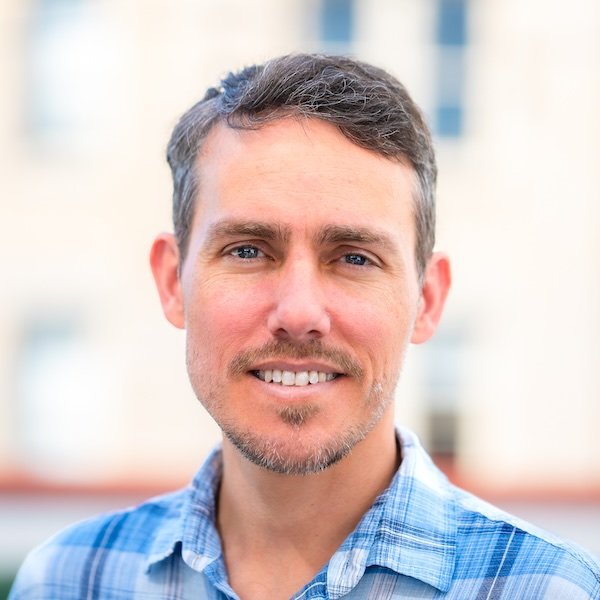
Sam Hummel leads research and strategy for the Money Justice Collaborative, a North American nonprofit project that works with social movements to challenge the ways banking and monetary systems intensify social and ecological crises. Sam is an active contributor within the Institute for New Economic Thinking (INET), the Alliance for Just Money, the American Monetary Institute, Rethinking Economics International, and the Just Money Project. Previously, Sam helped build two associations that support thousands of higher education institutions, governments, and corporations in implementing sustainability programs: the Sustainable Purchasing Leadership Council and the Association for the Advancement of Sustainability in Higher Education.
New Research — Before Public Release
The webinar presents findings from five years of research and interviews with 50 leaders in climate finance advocacy, banking scholarship and monetary reform.
The findings will form the basis of two forthcoming reports exploring why bank money creation remains a missing conversation in climate advocacy — and how banks’ dependence on public privileges could become a new source of leverage.
Participants will get an early look at the findings before the full reports are publicly released.
Organizers

















References
[1]
Historic opportunity
Central bankers, academics, monetary reformers, and policymakers around the world are currently discussing the problems and risks of the current monetary system and exploring new approaches to creating money. Citizens have a historic opportunity to influence and ensure that money creation is organised in a fair and sustainable way. That's why we are organizing courses and seminars on the subject. Sign up and feel free to invite friends and acquaintances.
❝
Never doubt that a small group of caring, committed citizens can change the world. In fact, it is the only thing that ever has.
Margaret Mead
The International Movement for Monetary Reform (IMMR) consists of non-profit organizations that focus on the most critical issue of our time - the creation and disappearance of money and its consequences for the development of society and our lives.
We are non-partisan and act only for this issue. Our vision is that the money system should be fair, sustainable, democratic, and used for the benefit of society as a whole. Read about IMMR here. Join our movement here.

© 2026 International Movement for Monetary Reform