AMI Conference 2025:
Avarice, Power, and the Future of Money
Welcome to a global gathering of economists, legal scholars, journalists, and activists exploring realistic and bold reforms to reclaim finance for the public good.
Online, Zoom
Why Attend?
In a world of abundance, billions of people are struggling, while enormous wealth and power become concentrated in the hands of a few. Why and how has this happened? What hidden forces fuel inequality, debt, and instability? And what realistic and bold reforms could create an economy that works for everyone?
The 2025 AMI Conference will uncover the answers. Over six days, leading economists, legal experts, journalists, and reformers will reveal how our financial system really works, explain why we need urgent change and discover realistic paths forward to an economy that truly serves the people and the planet.
23 Speakers
20 Sponsors
Whether you are a policy expert, activist, student, or simply a concerned citizen, this is your chance to understand the system, challenge the status quo, and help chart a path toward an economy that truly serves people and planet. We kindly encourage a donation of $35 at the time of registration, which will contribute to supporting the financing of the conference.
Register Now!
Sign up for the conference to watch the videos.
* By clicking the button, you agree to AMI emailing you more information about this and future conferences. You can stop receiving our emails whenever you want by clicking unsubscribe.
About the Conference
We proudly announce the 21st American Monetary Institute (AMI) Monetary Reform Conference, bringing the world’s leading experts on monetary history and theory together with the world’s most serious advocates of achievable monetary reforms.
The theme this year is Avarice, Power, and the Future of Money. The conference will focus on the heart of our society’s problems: an economy driven by avarice, where money is created, controlled, and used as a tool for private gain rather than a tool for the public good.

Over two weekends, the conference will shine a light on:
- The use of capital as power — how corporations and the financial sector shape economies, politics, and even social priorities.
- Private debt-based money creation — why commercial banks create roughly 95% of our money supply through loans, and how this fuels inequality, boom–bust cycles, and environmental harm.
- Social and economic justice — how the monetary system leaves millions unbanked or underbanked, and entrenches debt slavery.
The conference is not just an exposé of problems — it is a forum for practical, inspiring solutions. You’ll hear proposals from leading thinkers and practitioners, including:
- Sovereign money systems that treat money creation as a public utility, returning its benefits to society.
- Debt reform and jubilees to break the cycle of financial enslavement.
Speakers
Meet some of the world’s leading voices on economics, law, politics, and social justice to confront the roots of today’s financial and societal crises.
Schedule
The conference will have its Zoom sessions during two weekends:
- Friday September 19 5:25 pm – 9:30 pm CDT
- Saturday September 20 8:30 am – 2:00 pm CDT
- Sunday September 21 8:30 am – 2:00 pm CDT
- Tuesday September 23 1:00 pm – 3:00 pm CDT
- Friday September 26 5:30 pm – 10:00 pm CDT
- Saturday September 27 8:30 am – 2:00 pm CDT
- Sunday September 28 8:30 am – 2:00 pm CDT
All times Chicago, Central Daylight Time (CDT / UTC -5)
Friday, September 19
5:20 pm
Opening of the Conference
Steven Walsh
Dennis Kucinich
6:00 pm
The Birth of Public Money and Paradigm Shift in Economics as a Science

Kaoru Yamaguchi
8:00 pm
Break
8:05 pm
Why Monetary Reform is Essential to a Viable Human Future

David Korten
8:45 pm
Open Session
9:30 pm
Session Over
Saturday, September 20
8:30 am
Welcome
Steven Walsh
8:55 am
These Are the Plunderers: How Private Equity Runs—and Wrecks—America

Gretchen Morgenson
9:55 am
Break
10:00 am
The Socialization of Investment

Robert Hockett
11:30 am
Break
11:35 am
Monetary System Design: Some First Principles

Morgan Ricks
12:50 pm
Who is David Ciepley and Why He Matters

Bruce Woll
1:30 pm
Open Session
2:00 pm
Session Over
Sunday, September 21
8:30 am
Welcome
Steven Walsh
8:55 am
Our Money: Monetary Policy as if Democracy Matters

Leah Downey
9:55 am
Break
10:00 am
Neoliberalism and the Looting of America: How the Financial System increases the Racial Wealth Gap and Deepens Income-Based Class Inequality

Mehrsa Baradaran
11:00 am
Break
11:05 am
Building Multi-Issue Coalitions that Can Win Monetary Reforms

Sam Hummel
12:05 pm
Session Over
12:10 pm
How Wall Street Is Moving to Silicon Valley: How Financial Deregulation Led Wall Street to Monopolize the American Economy

David Dayen
1:30 pm
Open Session
2:00 pm
Session Over
Tuesday, September 23
1:00 pm
Temples of Enterprise: Debt, Finance, and Society from Antiquity to Today

Michael Hudson
2:30 pm
Open Session
3:00 pm
Session Over
Friday, September 26
5:30 pm
Welcome
Steven Walsh
5:55 pm
Monetary Reform for Beginners aboard Spaceship Earth 101

Nick Egnatz
6:55 pm
Break
7:00 pm
A Monetary Theory You Never Heard of: Classical American Populism and Public Banking

Adrian Kuzminski
8:00 pm
Break
8:05 pm
The Dire Perils of Stablecoin
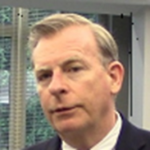
Joseph Arminio
9:05 pm
Break
9:10 pm
Money Issuance: The Primary Tool of the Sovereign

John G Root Jr
10:00 pm
Session Over
Saturday, September 27
8:30 am
Welcome
Steven Walsh
8:55 am
National Money – Shifting the Debate to the Next Level


Gábor Horváth / Gergely Szabo
10:10 am
Break
10:15 am
Mean, Stupid Money: How Finance Used The Monetary System to Destroy the American Dream and How We Can Bring It Back

Richard Robbins
11:45 am
Break
11:50 am
What Can and Should Be Done About Mass Layoffs? And How Do We Understand "Wall Street's War on Workers"

Les Leopold
1:30 pm
Open Session
2:00 pm
Session Over
Sunday, September 28
8:30 am
Welcome
Steven Walsh
8:55 am
Rethinking Income and Money:
Incorporating Technology Into Economic Theory

Geoff Crocker
9:55 am
Break
10:00 am
Douglas Social Credit: Restoring Honesty and Functionality to the Financial System

Oliver Heydorn
11:00 am
Combined Q&A Session
Heydorn / Crocker
11:15 am
Break
11:20 am
Can Money Creation Be Much Simpler? Untangling Public And Private Roles - Unleashing Prosperity for All

Mario Martinez
12:20 am
Break
12:25 pm
After Neoliberalism: Toward a Stewardship Economy

David Ciepley
1:30 pm
Open Session
2:00 pm
Session Over

The American Monetary Institute is a U.S.-based research and educational organization dedicated to the study of monetary history, theory, and reform. Founded in 1996, AMI’s mission is to end the private debt-based money systems that commercial banks and financial institutions have created since the start of central banking, and particularly over the last 55 years (Money Market Mutual Funds started in 1970). We need a public sovereign monetary system that serves the public interest rather than private banking interests.
AMI publishes research, organizes conferences, and provides resources on how money is created and managed, highlighting the risks of our present debt-based monetary system. The institute advocates for monetary reform based on the principles outlined in works such as The Lost Science of Money by its founder, Stephen Zarlenga.
Through its annual Monetary Reform Conference and public outreach, AMI brings together economists, academics, policymakers, and activists to discuss practical steps toward establishing a stable, debt-free monetary system that fosters economic justice and sustainability.
Co-sponsors

















Bios and Abstracts
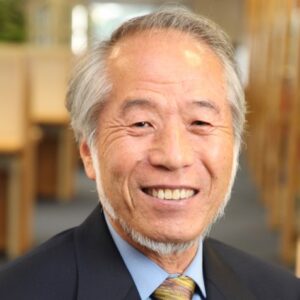
Kaoru Yamaguchi
Professor of Economics
6:00 pm Friday, September 19 (CDT / UTC -5)
The Birth of Public Money and Paradigm Shift in Economics as a Science

David Korten
Author and Activist
8:05 pm Friday, September 19 (CDT / UTC -5)
Why Monetary Reform is Essential to a Viable Human Future
Gretchen Morgenson
Senior Financial Reporter, NBC News Investigations
8:55 am Saturday, September 20 (CDT / UTC -5)
These Are the Plunderers: How Private Equity Runs—and Wrecks—America
A graduate of Saint Olaf College in Northfield, Minnesota, Ms. Morgenson worked as a stockbroker in New York City in the early 1980s, was a writer at Money Magazine later that decade and an assistant managing editor at Forbes Magazine in the 1990s. She is co-author, with Joshua Rosner, of “Reckless Endangerment,” a 2011 New York Times bestseller about the origins of the mortgage crisis. She is also co-author, with Rosner, of “These are the Plunderers,” a Wall Street Journal bestseller scrutinizing the world of private equity. Here, Gretchen Morgenson presents a deep dive into the way Wall Street Banks and Shadow Banking institutions fund private equity, Venture Capital, and Hedge Funds. In this highly acclaimed book - read by millions - Morgenson shows the dominance of private equity and its transformative effect in every sector of the economy.
Robert Hockett
Professor of Law
10:00 am Saturday, September 20 (CDT / UTC -5)
The Socialization of Investment
Morgan Ricks
Professor of Management
11:35 am Saturday, September 20 (CDT / UTC -5)
Monetary System Design: Some First Principles

Bruce Woll
Adjunct in History at Temple University, Philadelphia
12:50 pm Saturday, September 20 (CDT / UTC -5)
Who is David Ciepley and Why He Matters
Leah Downey
Junior Research Fellow at St. John’s College, University of Cambridge
8:55 am Sunday, September 21 (CDT / UTC -5)
Our Money: Monetary Policy as if Democracy Matters
Mehrsa Baradaran
Professor of Law and the Associate Dean for Equity, Diversity & Inclusion at the University of California, Irvine School of Law
10:00 am Sunday, September 21 (CDT / UTC -5)
Neoliberalism and the Looting of America: How the Financial System increases the Racial Wealth Gap and Deepens Income-Based Class Inequality
Baradaran will also spotlight the role of neoliberal reforms in transforming financial institutions into engines of extraction rather than public service. By connecting these policies to lived realities—especially within marginalized communities—she reveals how the promise of opportunity has too often been replaced by cycles of debt, precarity, and dispossession. Yet her analysis is not only diagnostic but constructive: Baradaran will outline concrete policy pathways toward a more equitable financial system, one that democratizes access to credit, banking, and wealth-building tools. Her presentation challenges us to rethink money and banking as public goods essential to a just and sustainable democracy.
Sam Hummel
Research Lead, Money Justice Collaborative
11:05 am Sunday, September 21 (CDT / UTC -5)
Building Multi-Issue Coalitions that Can Win Monetary Reforms

David Dayen
Journalist and Author
12:10 pm Sunday, September 21 (CDT / UTC -5)
How Wall Street Is Moving to Silicon Valley: How Financial Deregulation Led Wall Street to Monopolize the American Economy

Michael Hudson
Professor of Economics and Author
2:00 pm Tuesday, September 23 (CDT / UTC -5)
Temples of Enterprise: Debt, Finance, and Society from Antiquity to Today
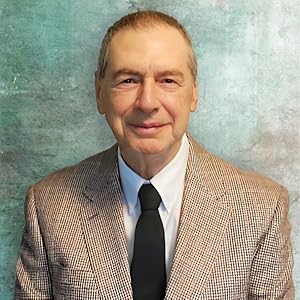
Nick Egnatz
Author, Trustee for the American Monetary Institute
5:55 pm Friday, September 26 (CDT / UTC -5)
Monetary Reform for Beginners aboard Spaceship Earth 101
history, and the urgent need for publicly issued money to save both people and planet. His latest work, Spaceship Earth 101, invites readers and audiences alike to rethink money as a tool for justice, democracy, and survival.

Adrian Kuzminski
Independent Scholar and Author
7:00 pm Friday, September 26 (CDT / UTC -5)
A Monetary Theory You Never Heard of: Classical American Populism and Public Banking
Joseph Arminio
Doctor of Philosophy
8:05 pm Friday, September 26 (CDT / UTC -5)
The Dire Perils of Stablecoin
MIT awarded Arminio the Doctorate in Political Science. On the strength of his latest book, Dr. Arminio sounds the alarm regarding digital currency and stablecoin through his project Turning Point 2025, found at TURNINGPOINT25.org. Arminio’s author page is cfar21.org/sanmodpublishers. He lives in Wilmington, Delaware.

John G Root Jr
Author and Community Organizer
9:10 pm Friday, September 26 (CDT / UTC -5)
Money Issuance: The Primary Tool of the Sovereign

Gergely Szabo
Economist and Fund Manager
8:55 am Saturday, September 27 (CDT / UTC -5)
National Money – Shifting the Debate to the Next Level

Gábor Horváth
Senior Economic Expert at the Central Bank of Hungary
8:55 am Saturday, September 27 (CDT / UTC -5)
National Money – Shifting the Debate to the Next Level

Richard Robbins
Distinguished Teaching Professor Emeritus in the Department of Anthropology at SUNY Plattsburgh
10:15 am Saturday, September 27 (CDT / UTC -5)
Mean, Stupid Money: How Finance Used The Monetary System to Destroy the American Dream and How We Can Bring It Back
While we sometimes hear complaints about the salaries and bonuses captured by Wall Street executives and corporate CEOs, investment finance—the process of making money with money—receives a relatively free ride from those trying to explain the explosion of economic inequality in the U.S., the political polarization destroying civic life, and the phenomenon of a six-times bankrupt billionaire real estate investor upending the rule of law. This paper will outline how the increasing share of wealth captured by investors over the past four decades impoverished millions while, at the same time, creating a class of billionaires with the financial and political power to reshape our society in their image. It will also offer a political strategy to bring finance and money back to the constructive role that it once played in the realization of the American dream.

Les Leopold
Author and Labor Advocate
11:50 am Saturday, September 27 (CDT / UTC -5)
What Can and Should Be Done About Mass Layoffs? And How Do We Understand 'Wall Street’s War on Workers'

Geoff Crocker
Economist, Author, and Policy advocate
8:55 am Sunday, September 28 (CDT / UTC -5)
Rethinking Income and Money: Incorporating Technology Into Economic Theory
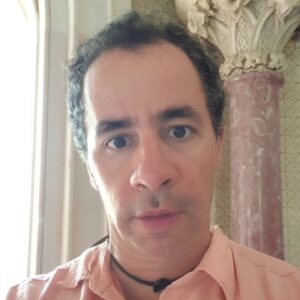
Oliver Heydorn
Director of the Clifford Hugh Douglas Institute for the Study and Promotion of Social Credit, Canada
10:00 am Sunday, September 28 (CDT / UTC -5)
Douglas Social Credit: Restoring Honesty and Functionality to the Financial System

Mario Martinez
Economist, Activist, and President of Dinero Positivo
11:20 am Sunday, September 28 (CDT / UTC -5)
Can Money Creation Be Much Simpler? Untangling Public And Private Roles - Unleashing Prosperity For All
change everything about how money works.
David Ciepley
Associate Fellow at the Institute for Advanced Studies in Culture, University of Virginia
12:25 pm Sunday, September 28 (CDT / UTC -5)
After Neoliberalism: Toward a Stewardship Economy
Over time, whoever controls the money system, controls the nation.
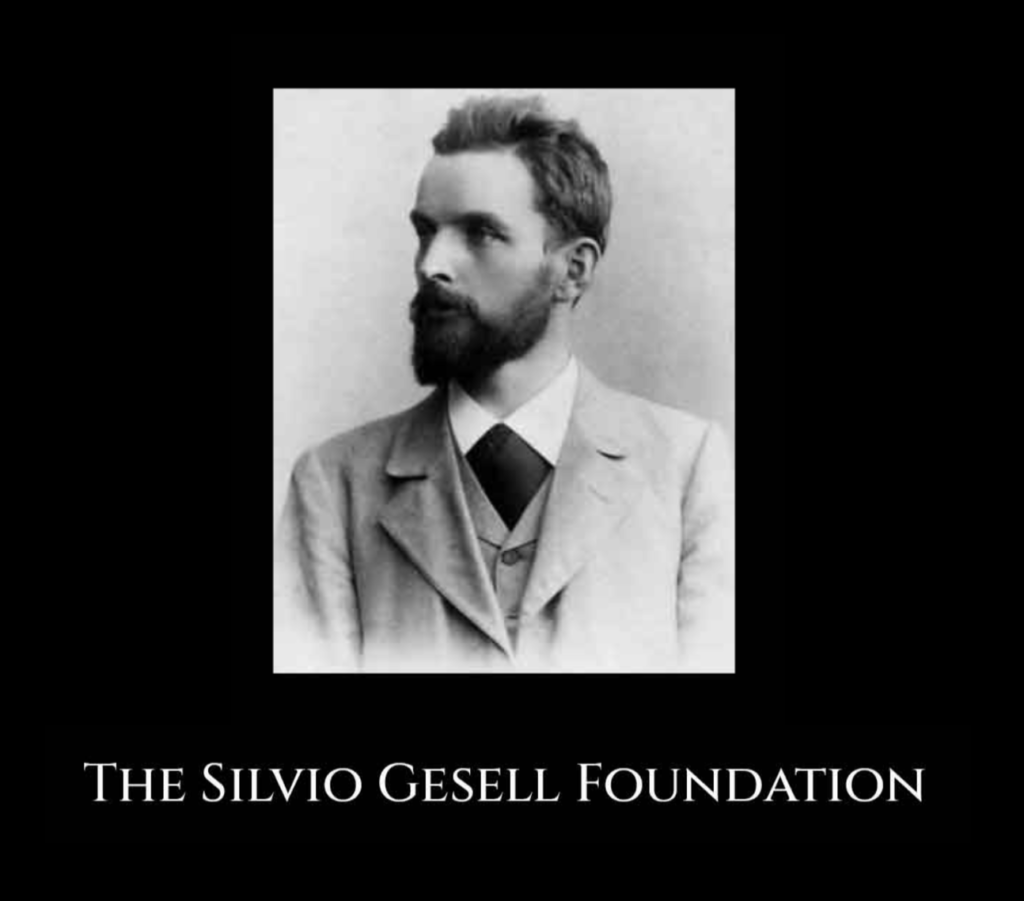
Stephen Zarlenga
(1941 – 2017)