
AMI Conference 2026
Preparing for the Next Collapse:
Monetary and Financial Reforms Are Crucial
September 25-27, Online
About the Conference
This year’s 22nd American Monetary Institute Conference builds on last year’s conference. For example, Professor Yamaguchi, the world’s foremost systems dynamics modeler of monetary systems, continues to elaborate on his work as expressed in Public Money. He will answer questions posed in advance about his past work and his work as expressed in his book, Public Money. Professor Yamaguchi’s work in Japan serves as an important model for monetary thinkers elsewhere.
Richard Robbins, Steve Keen, Michael Hudson, Joseph Huber, and Oliver Heydorn will also build upon their previous works, including AMI presentations. Their work can inform us about how the present system is working and suggest new directions.
To create strategies for introducing new people and organizations to monetary reform as well as sharing ideas to build a better monetary system for our own countries, we have: Howard Switzer, Robert Ndubi, Loke Hagberg, Richard Cook, the International Movement for Monetary Reform’s CORE leadership team, and the Alliance For Just Money’s Research and Policy Committee members, all sharing their work.
14 Presentations
24 Sponsors

Whether you are a policy expert, activist, student, or simply a concerned citizen, this is your chance to understand the system, challenge the status quo, and help chart a path toward an economy that truly serves people and planet. We kindly encourage a donation of $35 at the time of registration, which will contribute to supporting the financing of the conference.
Register Now!
* By clicking the button, you agree to AMI emailing you more information about this and future conferences. You can stop receiving our emails whenever you want by clicking unsubscribe.
Speakers
Meet some of the world’s leading voices on economics, law, politics, and social justice to confront the roots of today’s financial and societal crises.
Schedule
The dates and (approximate) times will be:
Friday September 25 11:50 am – 10:00 pm CDT
Saturday September 26 8:00 am – 4:00 pm CDT
Sunday September 27 8:00 am – 4:00 pm CDT
All times Chicago, Central Daylight Time (CDT / UTC -5).
Friday, September 25
11:50 am
Intro to Conference
Steven Walsh
12:00 pm
Dedollarization

Michael Hudson
1:35 pm
On “The Origins of the NEED Act”

Richard Cook
3:10 pm
Dinner Break
5:50 pm
Questions on Public Money
Kaoru Yamaguchi
7:40 pm
Money and Payments
Joe Polito
Randy Cook
Rick DiMare

Mike Holden
Saturday, September 26
6:30 am
Replay for other side of planet
Kaoru Yamaguchi
8:10 am
Monetary Reforms and Household Financial Health in Kenya
Robert Ndubi
9:00 am
CBDC: The Case for the Digital Euro
Joseph Huber
10:30 am
How Governments Turn Commercial Bank Debt into Money
Sam Hummel
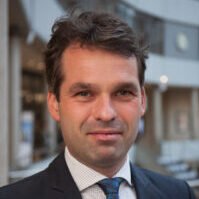
Martijn Jeroen van der Linden
Saturday, September 26
12:00 pm
Lunch Break
1:00 pm
Must It Grow? Four Answers to One Question, and What They Have in Common

Richard Robbins
2:45 pm
C.H. Douglas’ Proposal of the “Electoral Campaign, and its Application in the Province of Québec
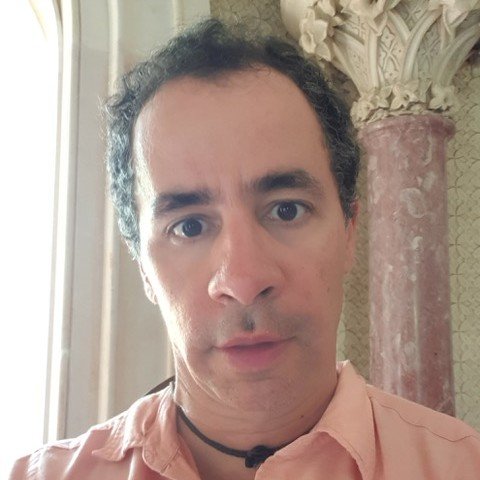
Oliver Heydorn
Sunday, September 27
8:00 am
IMMR at 10 Years… Working to Support Monetary Reform for All Nations

Loke Hagberg
Mark Young
9:20 am
Critical insights of an IMMR Economist
Loke Hagberg
10:20 am
How a public money system will be needed when catastrophic climate damages occur

Steve Keen
11:40 pm
Lunch Break
12:50 pm
Jubilee 2026: A Practical Path to Sovereign Money
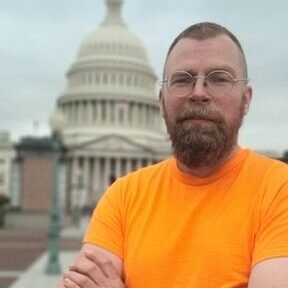
Brian Winters
1:50 pm
Addressing the Conference
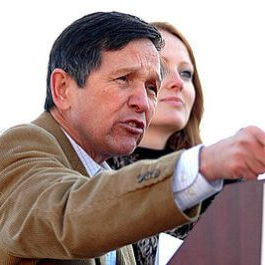
Elizabeth and Dennis Kucinich
2:30 pm
Restorative Justice: Healing the Body Politic from the Ground Up

Howard Switzer

The American Monetary Institute is a U.S.-based research and educational organization dedicated to the study of monetary history, theory, and reform. Founded in 1996, AMI’s mission is to end the private debt-based money systems that commercial banks and financial institutions have created since the start of central banking, and particularly over the last 55 years (Money Market Mutual Funds started in 1970). We need a public sovereign monetary system that serves the public interest rather than private banking interests.
AMI publishes research, organizes conferences, and provides resources on how money is created and managed, highlighting the risks of our present debt-based monetary system. The institute advocates for monetary reform based on the principles outlined in works such as The Lost Science of Money by its founder, Stephen Zarlenga.
Through its annual Monetary Reform Conference and public outreach, AMI brings together economists, academics, policymakers, and activists to discuss practical steps toward establishing a stable, debt-free monetary system that fosters economic justice and sustainability.
Endorsing Organizations




















Bios and Abstracts
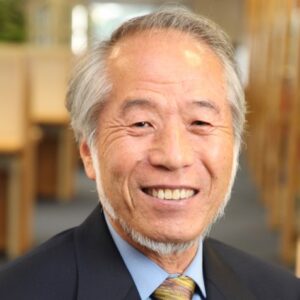
Kaoru Yamaguchi
Professor of Economics
5:50 pm Friday, September 25
Question on Public Money
Richard Cook
Author & Former U.S. Treasury Analyst
1:35 pm Friday, September 25
On “The Origins of the NEED Act”
Howard Switzer
Monetary Reform Advocate & Researcher
2:30 pm Sunday, September 27
Restorative Justice: Healing the Body Politic from the Ground Up
Brian Winters
Author & Democracy Reform Advocate
12:50 pm Sunday, September 27
Jubilee 2026: A Practical Path to Sovereign Money
Built on the principles of nonviolence and the organizing tactics of Gandhi and Martin Luther King Jr., Brian presented his model of collaborative democracy in his 2024 novel, Looking Backward from the Tricentennial: A Timely Tale of Nonviolent Revolution (published under the pen name Dante J. Unitas so forthcoming nonfiction will not confuse the algorithm gods). He is seeking voters willing to collectively bargain for a better social contract through his campaign website, votewithbrian.com.
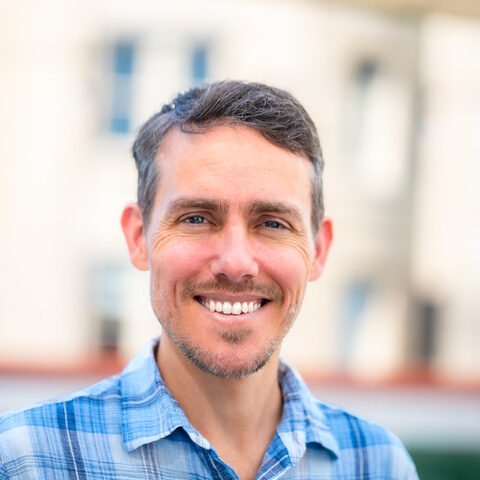
Sam Hummel
Research Lead, Money Justice Collaborative
10:30 am Saturday, September 26
How Governments Turn Commercial Bank Debt into Money
Loke Hagberg
IMMR Economist
9:20 am Sunday, September 27
Critical insights of an IMMR Economist
About the talk: Loke Hagberg is going to talk about a some of his work in economics: about economic modelling, about monetary reform strategies, and about his CBCC (Central Bank CryptoCurrency) design with the property of having an arbitrary degree of decentralization.
Bio: Loke Hagberg is an economist, physicist, computer scientist and philosopher. He led the work in constructing the first forum for predictive liquid democracy to our knowledge: Flowback.
Richard Robbins
Distinguished Teaching Professor Emeritus in the Department of Anthropology at SUNY Plattsburgh
1:00 pm Saturday, September 26
Must It Grow? Four Answers to One Question, and What They Have in Common
About the talk: There is a claim about modern economies that almost everyone who thinks about money for the first time arrives at independently, and that almost no economist will endorse. The claim is that an economy whose money is created as interest-bearing debt must grow perpetually or collapse. The reasoning takes a sentence: banks create the principal of a loan but not the interest, so the money required to repay all outstanding debt does not exist, and the shortfall can be met only by further borrowing—which is to say, by expansion. The claim is intuitive, widely held outside the discipline, and does not survive contact with the accounting. Interest paid to a bank becomes the bank’s income. The bank spends it on salaries, premises, and dividends. It re-enters circulation as someone else’s deposit, available to be earned by the borrower who owes the next payment. Money circulates; it is not consumed on payment. So the intuitive version fails. What I want to argue is that the question it was trying to ask does not, and that four literatures—which barely cite one another—have converged on the same condition without noticing. I will talk about money for 30 minutes, setting up the problematic regarding the role of debt-money, and then invite the audience into multiple conversations.
Bio: Richard Robbins is Distinguished Teaching Professor at the Department of Anthropology at SUNY, Plattsburgh. His books include Global Problems and the Culture of Capitalism (7th edition) with Rachel Dowty, (selected by Choice: Journal of the Association of College and Research Libraries as An Outstanding Academic Title of the Year), Cultural Anthropology: A Problem-Based Approach (8th edition) co-authored with Rachel Dowty Beech, (which received the Text and Academic Authors Association textbook of the year award for the social sciences), Debt as Power, (runner-up for 2017 Sussex International Theory Prize) and An Anthropology of Money, both co-authored with Tim Di Muzio. He received the SUNY Chancellor's Award for Excellence in Teaching and the American Anthropological Association/McGraw-Hill Teacher of the Year Award. Dr. Robbins joined the recently founded Advisory Board of the Alliance For Just Money.
Oliver Heydorn
Director of the Clifford Hugh Douglas Institute for the Study and Promotion of Social Credit, Canada
2:45 pm Saturday, September 26
C.H. Douglas’ Proposal of the Electoral Campaign, and its Application in the Province of Québec
About the talk: In order to implement the Social Credit monetary reform proposals, C.H. Douglas did not advocate for the formation of a conventional political party, but rather for electoral campaigns run by "voters' unions". This presentation will trace the historical attempts that were made by Social Crediters to apply Douglas' advice in the Canadian province of Québec during the 1940's.
Bio: M. Oliver Heydorn B.Sc. (biology), M.A. (philosophy), graduated summa cum laude with a Ph.D. in Philosophy from the International Academy of Philosophy at the Catholic Pontifical University of Santiago, Chile. His dissertation, undertaken under the directorship of Dr. Josef Seifert, was entitled: Insight and Existence: The Role of A Priori Knowledge in the Cogito according to Dietrich von Hildebrand. After having taught as an Assistant Professor of Philosophy at three different universities in three different countries, he became the founder and director of the Clifford Hugh Douglas Institute for the Study and Promotion of Social Credit (www.socred.org). He is the author of four books on Douglas Social Credit theory: Social Credit Economics, The Economics of Social Credit and Catholic Social Teaching, Social Credit Philosophy, and Lives of our Own: Social Credit, Catholicism, and a Distributist Social Order and is the main architect behind the Douglas Social Credit animated series which is viewable on youtube.com (Douglas Social Credit).
Michael Hudson
Professor of Economics and Author
12:00 pm Friday, September 25
Dedollarization
About the talk: For decades, many countries around the world have held on to dollars and U.S. Securities, but now that is changing, and changing faster than many hoped or thought possible. It also brings new opportunity. Please join us for what promises to be a fascinating conversation.
Bio: Michael Hudson is one of the world’s leading financial analysts and is a critic of capitalism, especially in its present form of rampant greed economics. One of Hudson’s specialties is to analyze and explain how the world is dominated by the FIRE sector - Finance, Insurance, and Real Estate. Besides being a present-day scholar, Professor Hudson is a leading authority on ancient economics of the Middle East, ancient Greece, and Rome. He has thoroughly documented the rise of private property, contract law, rentier class, and debt. In our fourth interview on ancient economics, we will cover the slow but steady downfall of debt forgiveness and jubilees starting in the Middle Bronze Age and work our way to more recent history while making connections to the present and other historical periods. Come for this fascinating discussion, and take a chance to ask your questions.
Steve Keen
Professor and Author
10:20 am Sunday, September 27
How a public money system will be needed when catastrophic climate damages occur
About the talk: As climate damage increasingly disrupts productive capacity, infrastructure, insurance, and financial systems, conventional assumptions about public finance may become untenable. Steve Keen argues that mainstream economics systematically understates the economic consequences of climate change while neglecting the fundamental role of energy in production. This presentation examines why catastrophic climate damages may require governments to create and deploy public money directly to sustain essential production, reconstruction, and social stability.
Bio: Professor Steve Keen is widely regarded as one of the world's most accurate analytical economists, voted in 1st place for the inaugural Revere Award for Economics in 2010 by the (Real) World Economics Association for giving an early warning (initially in 1995) for the 2008 financial crisis using his highly advanced economic modeling system: MINSKY. Professor Keen has continued to refine his MINSKY system to dynamically model real economic inputs and outputs, and is now known as Ravel. In 2012 he was invited to give testimony at a Congressional Briefing in Washington, DC on Avoiding the “Fiscal Cliff” and the mistakes of the Great Depression to warn Congress on the dire consequences of austerity in the midst of a recession. More recently Professor Keen has done important work in the field of energy analysis as it applies to economics, and the wider social and environmental ramifications of our present energy use.
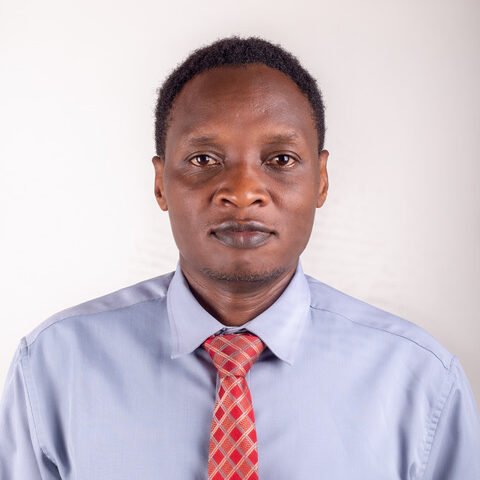
Robert Ndubi Barimo
Economist & PhD Student at the University of Nairobi
8:10 am Saturday, September 26
Monetary Reforms and Household Financial Health in Kenya
About the talk: Central Bank of Kenya policy affects on households. Fintech, the evolution of digital platforms, and monetary reform will be discussed.
Bio: Robert Ndubi Barimo is an economist with a strong interest in monetary policy, entrepreneurship, financial innovations, and international trade. He holds a Bachelor of Arts in Economics from Egerton University and a Master of Arts degree in Economics from the University of Nairobi. He is currently enrolled in a PhD in Economics at the University of Nairobi. He possesses strong Professional experience in international trade, trade policy, enterprise development, monetary policy, and regional economic integration, with specialized training from institutions and programs associated with the United Nations, World Trade Organization (WTO), UNCTAD, International Trade Center (ITC), African Union, Afreximbank, and other international development institutions. His areas of competence include trade negotiations, WTO trade facilitation, cross-border trade, export development, trade finance, commercial diplomacy, market intelligence, trade-flow analysis, investment promotion, AGOA, AfCFTA, EAC and COMESA integration, and private-sector development. His overarching professional objective is to apply economics, research, monetary and financial intelligence, and policy expertise to support evidence-based decision-making, institutional development, Nonstate actors and private-sector growth, public-sector performance, and sustainable economic development in Kenya and globally.
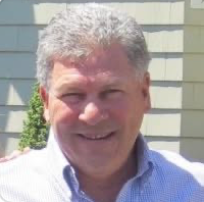
Richard DiMare
Legal Analysis and Researcher
7:40 pm Friday, September 25
Bio: Richard DiMare is a graduate of Boston College (1988) and the Massachusetts School of Law (2002), and has been a licensed Massachusetts attorney since 2006. He is interested in only one area of law, that which helps wage-earners, both white and blue-collar, to claim a property right in their wages, thus beginning the long-overdue process of shifting the tax burden away from wages and onto unearned incomes and large estates. Richard’s interest in this area of law likely developed from his background in the commercial fishing and seafood industries, witnessing many workers fighting for survival wages, then being taxed on those wages, while passive receivers of unearned incomes were increasingly under-taxed, or not taxed at all. Additionally, legal recognition of a property right in wages may end the exploitation of labor that underlies and inflames the global conflict between Marxism and neoliberalism.
Joe Polito
Treasurer of a Kiwanis Club
7:40 pm Friday, September 25
Bio: Joe Polito has a post-grad degree majoring in Economics, Finance, and Human Resources. In 40 years of teaching, one of his subjects was Economics. In the 80's he was a fan of COMER and its promotion of debt-free money. After the Great Recession, Joe took a deeper dive, and after Kumhof's "The Chicago Plan Revisited", he decided to be active in promoting that vision by joining advocacy groups like AMI and Progressive Money Canada, and by communicating with good politicians and journalists.
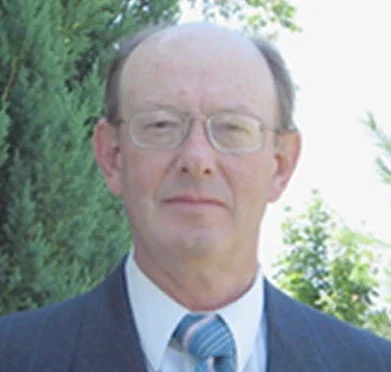
Randy Cook
President of The National Organization for Raw Materials
7:40 pm Friday, September 25
Bio: Randy Cook has operated a fruit farm in Charlotte, Michigan, since 1975. Over the last ten years production techniques have focused on eliminating synthetic fertilizers and pesticides while increasing freshness and nutritional quality. He earned a Bachelor of Science degree, with honor, and a provisional teaching certificate for high school courses in history, social science and physical science from Michigan State University in 1972. Randy was elected President of the National Organization for Raw Materials (NORM) in 1997. This group was formed in 1936 to analyze the economic record of the United States. The results of that continuing research effort demonstrate the viability of Par-economy as a sound method of generating national prosperity and security for both current and future generations.
Randy has authored 8 issues of NORM’s Economic Report of the Producers and continues to research sound economic practices and policies, the American System of economics, and humanely practical solutions for our local, national and world conditions. He gave a presentation at Utah Valley University's Ethics Symposium in 2011 “Fixing a Broken Economy,” on “American Prosperity: a Timeline and Prescription.” Most recently he has given presentations to the American Monetary Institute (Oct. 2019) and the Eastern Economic Association as well as the Henry George School in New York City (Mar. 2019).
Mike Holden
AMI Steward, AFJM Research and Policy Committee Chair and Board Member
7:40 pm Friday, September 25
Money and Payments
About the talk: The Alliance for Just Money Research and Policy Committee established the Payment Systems Working Group to evaluate the nature of modern money and payment systems with an emphasis on reform possibilities. The impetus came from Rick DiMare’s study of Henry Simons’ Chicago Plan, which put all “transaction accounts” (deposit banking) under Treasury. Rick’s legislation, the Greenback Restoration Act, accomplishes Simons’ objective, but AFJM needed additional research to understand the relevancy to monetary reform. This presentation showcases our understanding of the payments system today, which, much like the monetary system we seek to reform, is subject to inordinate rent-seeking and is not in the best interest of the community, but rather, only in the interest of the individual rentier. Starting with a deep study of Michael Hudson’s Origins of Money and Interest: Palatial Credit, not Barter it was found that money, credit, and interest were all essential components administered by the state which innovated accounting practices to manage the economy. This is still the case today, except the money and payments system, as well as accounting practices, have been privatized and subject to massive rent-seeking. From the extreme margins that credit card companies make off of their customers through loan issuance, to digital payment processors that gate keep between buyer and seller, to private clearing and settling functions, the payments system is much like the monetary system; what should be a public utility that works in the best interest of the community has become a profit center for rent-seekers. This presentation is divided into four segments; Mike Holden will describe the modern payments ecosystem and show how the system has been privately expropriated; Randy Cook will describe the way that the money and payments system has drastically overshot the real wealth production that the money and payments system should represent; Rick DiMare will then summarize the Greenback Restoration Act, which effectively nationalizes the payments system by putting all transaction accounts under Treasury administration; Joe Polito will then describe reform possibilities such as tax policy modifications.
Bio: Mike Holden is a 20+ year STEM engineer with a physics degree focusing on monetary reform since 2023. He is the Alliance for Just Money Research and Policy Committee chair and board member along with AMI steward.
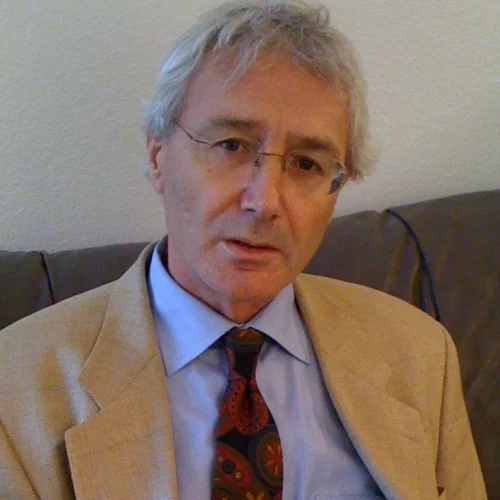
Joseph Huber
Professor and Author
9:00 am Saturday, September 26
CBDC: The Case for the Digital Euro
About the talk: The presentation explains how the digital euro is intended to work as a means of payment and what conflicts of interest in monetary policy are associated with its introduction. A draft bill on the digital euro had been before the European Parliament since June 2023. Until recently, however, nothing happened. This is because CBDC is in direct competition to bank money and may replace it in the long run. So the design is now rather banking-friendly, in that individual access to digital euros is quite restricted, and banks act as distributors and payment service providers.
Bio: Joseph Huber is Professor emeritus of economic and environmental sociology, Martin-Luther University, Halle-Wittenberg, Germany. He is the founder of the monetary reform organization Monetative e.V. Berlin and is the editor and main author of the web site Sovereign Money: Website for Monetary System Analysis and Reform. His main publication relevant to monetary theory and reform is Sovereign Money: Beyond Reserve Banking (London: Palgrave Macmillan, 2017). His many articles on monetary history, theory and reform can also be accessed on the Extensive Bibliography maintained by AFJM. He was a presenter and panelist at the 2018 Swiss conference “Our Money, Our Banks, Our Country – Money Creation in the Modern Economy”, pleading in favor of the Swiss monetary reform referendum. Currently he is a member of the Advisory Panel of Positive Money (UK) and serves on the recently founded Board of Advisors of the Alliance For Just Money.
Martijn Jeroen van der Linden
Professor of Practice in New Finance at the Hague University of Applied Sciences
10:30 am Saturday, September 26
How Governments Turn Commercial Bank Debt into Money
About the talk: Almost all the money in circulation is created by private banks when they lend. Central banks and economists broadly agree on this, yet most politicians and members of the public don't know it. That matters: since 2008, a growing body of research has linked bank money creation to financial instability, economic stagnation, rising inequality, climate change and the affordability crisis. Part of the reason for the silence is that this power isn't written into any single law. Instead, it emerges from a web of government-granted privileges that make bank deposits the nation's main means of payment. Some are familiar, like deposit insurance and access to central bank reserves. Others are far less visible, like prospectus exemptions, special resolution regimes, consumer protection waivers, and limits governments place on their own ability to issue public money. This talk brings more than a dozen of these privileges together in one place and asks what it would mean for democracy if citizens and policymakers could finally see the full picture.
Bio: Martijn Jeroen van der Linden researches the digitisation and geopolitics of money, and the integration of environmental and social values in finance. A Professor of Practice in New Finance at The Hague University of Applied Sciences, Martijn holds a PhD from Delft University of Technology. In his PhD research, he developed design guidelines for the monetary and financial system in the digital era. His current research centers on the geopolitics of public digital money, including stablecoins and cryptocurrencies. He also examines financial instability, the liberalisation and re-regulation of banking, integrated reporting (Corporate Sustainability Reporting Directive, Corporate Sustainability Due Diligence Directive) and long-term value investing.
Over time, whoever controls the money system, controls the nation.
Stephen Zarlenga
(1941 – 2017)